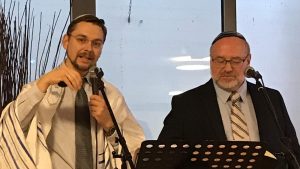

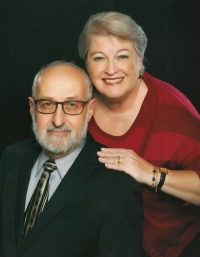
For almost twenty centuries Jews have been accused of killing Jesus. So-called «Christian anti-Semitism» is essentially based on this accusation. The indescribable suffering of our people, including countless pogroms and murders, is due to this very accusation. But is this accusation fair? Dr. Fisher, rabbi of the Or Hadash Jewish Messianic Synagogue in Clearwater, Florida, USA ((https://ohrchadash.org) shows that the ‘Brit Hadasha’ (New Testament) paints a completely different picture.https://ohrchadash.org) shows that the Brit Hadasha (New Testament) paints a very different picture.
Yeshua didn't just come to the Jews, He came to His creation.
«Breishit a-ya a-davar» («In the beginning was the Word» Hebrew; Johanan 1:1) is how the Gospel of Johanan begins. But a few verses further on we read a statement often subject to misinterpretation:
«He came to His own, and His own received Him not.»
Johanan 1:11
Because of our lack of understanding of this and other such places, we as a people have been accused of the evil we have done to Yeshua and of turning away from Him - the One who came to walk among us. For the past two millennia, we have paid for this with the lives of our people. Sadly, this story has not ended in our time either. Because if we Jews have turned our backs on the Messiah as a gift from G-d, we must suffer the corresponding curse and be worthy of what is happening to us. However, it is not that simple.
So, in the beginning was the Word. Two verses later we read that all things were created by Him:
«By Him all things began to be, and without Him nothing began to be that began to be.»
Yohanan 1:3
In the context of this idea, who are we talking about when we read that He came to His own? If we are talking about His creation, we are talking about the whole world, for He created everything and everyone. In other words, it is not talking about us as a people turning away from Him. But that is not all. There is another reason that supports this idea. It is recorded in the Gospels.
The reaction of the Jews of the 1st century CE to Yeshua and His teaching
Mark narrates:
«...And the multitude of the people listened to Him with pleasure.»
Mark 12:37
Yeshua is in Israel among His people, the Jews. It was the Jews who listened to Him with pleasure. The people respected Him so much that when the chief priests and their staff wanted to get rid of Yeshua, they were afraid to do so because of the people:
«...and they schemed to arrest Jesus secretly and kill him. But not during the festival,” they said, “or there may be a riot among the people.»
Matityahu 26:4-5
In other words, crowds of Jews followed Yeshua and loved Him.
Yochanan describes Yeshua in the words of those around Him:
Still, many in the crowd believed in Him. They said, “When the Messiah comes, will he perform more signs than this man?”
Jochanan 7:31
Many of the Jewish people believed in Him! A few chapters later the same Jochanan writes:
"The P'rushim (pharisees) said to each other, "Look, you're getting nowhere! Why, the whole world has gone after him!""
Jochanan 12:19
Religious leaders who try to take action against Yeshua accuse Him of having «the whole world» follow His teachings. By this expression «the whole world» they mean the vast number of Jews who followed Yeshua. A little earlier in chapter 6, Jochanan wrote:
"Yeshua knew that they were on the point of coming and seizing Him, in order to make Him king; so He went back to the hills again. This time He went by Himself."
Jochanan 6:15
The Jews wanted to make Him their King. They wanted to anoint Him to be their anointed king. Mashiach.
Yeshua is the recognized Mashiach of Israel
How do we know that everything we are talking about right now is true? Let's take a trip back in history to an event called «Palm Sunday» in Christianity. The situation leading up to this event is as follows: a few days before Passover, Yeshua descends on a donkey from the Mount of Olives and approaches Jerusalem through the Kidron Valley, entering the city through the eastern gate. At this time, Jerusalem is crowded with religious Jews who have come to celebrate the festival. When they see Yeshua, they greet Him:
"Crowds of people carpeted the road with their clothing, while others cut branches from trees and spread them on the road. The crowds ahead of him and behind shouted, "Please! Deliver us!" to the Son of David; "Blessed is he who comes in the name of ADONAI!" "You in the highest heaven! Please! Deliver us!"
Matityahu 21:8-9
If a group of people in those days wanted to welcome an important guest, they would cut palm leaves and lay them on the road. That is, the religious Jews, seeing Yeshua coming, cut palm branches and laid them on the road in front of Him, welcoming Him as their king.
Notice what they say as they do so. The first word we read is «Hosanna". Some think that with this word they were praising Yeshua. However, in Hebrew the word is Hoshana (Save us now). They were not praising Him, but praying to Him!
During the holiday of Sukkot, there is a «Great Day of Sukkot («Hoshana Raba» Hebrew)». On this day, special prayers called Hoshanot are recited. These prayers are addressed to the one who is called by the Messianic title"Branch of David"Notice that it is with these prayers that the people address Yeshua. However, instead of «Branch of David» they call Him"son of David",Because «Son of David» was the most common title for the Messiah at that time. I.e., they actually call Him the Messiah.
Their next exclamation is «blessed is He who comes in the name of the Lord!». The ancient rabbis taught that if you have the opportunity to personally greet the Messiah when He comes, this is what you should say to Him: "Baruch haba beshem Adonai" ("Blessed is He who comes in the name of the Lord"). The people welcome Yeshua the way our rabbis taught us to welcome the Messiah!
So, in this passage, Matityahu shows four important points by which the Jews welcomed Yeshua:
- Palm leaves representing the greeting of the great king;
- The recitation of Messianic prayers;
- They call Yeshua the Messiah, the Son of David;
- They welcome Him as the Messiah, in accordance with the teachings of the rabbis.
All of this clearly shows that the Jewish people did not reject Yeshua, but accepted Him as the Messiah. This is what we read in the Gospels, no matter how misunderstood they are sometimes.
Who were those who demanded Yeshua's execution?
However, immediately after these events, something happens that causes Yeshua to be executed. But before we touch on this topic, let's look at one more thing. Luke describes the event of Yeshua being led out of Jerusalem to be executed:
"Large numbers of people followed, including women crying and wailing over him."
Luke 23:27
Why are they crying? Because their Messiah is being led to execution.
A common question some people ask is: What happened to the people who welcomed Yeshua as the Messiah? Luke tells us that the Jewish people wept as He was led away to be executed.
What had happened shortly before? The high priest and his staff have sent soldiers to arrest Yeshua. Yeshua is brought to the courtyard of the Roman governor, the procurator Pontius Pilate, where the people are also present, shouting: «crucify him!».
If you have been to Jerusalem and have seen Pilate's court, you have certainly noticed that the court could hold no more than a hundred people. How many Jewish pilgrims who came to celebrate Passover were in Jerusalem at this time? It is known that about 200,000 people converged on this feast each year. At this time, there were about 2.5 million people living in Israel. So 100 out of 2.7 million people shouted «crucify Him.» There were about 8 million Jews living in the entire Roman Empire at this time. That is, 100 out of 8 million Jews demanded that Pilate execute Yeshua.
Who were these 100 men standing before Pilate? We know that the day Yeshua appeared before Pilate was the day of preparation for Passover. According to Jewish tradition, Jews spend this day at home preparing for the great feast. Which of them, leaving their preparations behind, rushed to the courtyard of the Roman governor in the early morning to demand Yeshua's death? Certainly they were men chosen specifically for this task and who came at the insistence of the high priest and his staff.
There is another detail overlooked by those who believe that the Jews did not recognize and crucify their Messiah. When you read chapter 18-20 of the Gospel of Yohanan, you notice that it was the high priest and his men who demanded execution for Yeshua. Did Pilate honor their request? No, he did what he wanted to do himself.
Pontius Pilate, as we know him from history, was an extremely negative person. He hated the Jews and found pleasure in hurting them. And now he was willing to do anything to make them angry. Eventually the Roman authorities removed him from Judea. The Jews would not be able to force this Pilate to follow their will. Luke gives us Yeshua's words to his disciples just before His execution:
«But when he had withdrawn his twelve disciples, he said unto them, Behold, we go up to Jerusalem, and all things written through the prophets concerning the Son of man shall be accomplished: for they shall deliver him up to the Gentiles, and shall mock him, and shall insult him, and shall spit upon him, and shall scourge him, and shall beat him, and shall kill him: and the third day he shall rise again»
Luke 18:31-33
Who did Yeshua say would kill Him? Gentiles, not Jews at all.
The events following Yeshua's resurrection
What happened after Yeshua's death and resurrection on the Feast of Shavuot? His disciple Shimon preaches to a great number of people about the resurrection from the dead, which proves that Yeshua is the promised Messiah of Israel and Lord of the whole world. Luke tells us (Luke 2:41) that the three thousand Jews who came to the feast believed it.
However, this is an inaccurate figure. According to the tradition of the time, women and children were not counted. We can safely assume that there were as many women and probably at least twice as many children. In other words, we are probably talking about 12,000 people who heard Shimon preach and believed in Yeshua. That's a lot of people.
But two chapters later we read of another 2,000,000 men (Acts 21:20), which by our calculations could be 8,000 Jewish men women and children. Then we come to chapter 21 and witness a dialog between Rabbi Shaul (Paul) and the leader of the Jerusalem Messianic congregation, Yeshua's own brother, Jacob, who, along with other members of the congregation, reports:
"On hearing it, they praised God; but they also said to Him, "You see, brother, how many tens of thousands of believers there are among the Judeans, and they are all zealots for the Torah."
Acts 21:20
The way Luke wrote these words leads us to believe that there were 30,000 Messianic Jews living in Jerusalem who believed in Messiah Yeshua. At this time the population of Jerusalem consisted of 70,000 people. Messianic Jews made up just under half the population of Jerusalem.
This is quite consistent with what we have already read in the Gospels. If the Jews had gladly followed Yeshua before His death, it makes sense that now, after His resurrection from the dead, they would believe in Him as their Messiah, joining the community of Yeshua's followers.
Some time after these events, we read in the letter of Neander - the one who is called the father of church history - that by the end of the first century there were about 1 million Messianic Jews living in Israel, which had a population of 2.5 million. We were once a very large number.
Famous personalities among the Messianic Jews of the 1st century
Among Yeshua's followers were also the leaders of the nation of Israel. We read about this in the Gospels:
"Nevertheless, many of the leaders did believe in Him..."
Yochanan 12:42
It goes without saying that after His resurrection from the dead, there were significantly more of them.
"So the word of God continued to spread. The number of talmidim in Yerushalayim increased rapidly, and a large crowd of cohanim were becoming obedient to the faith."
Acts 6:7
Two of these leaders played important roles in Jewish history. One of them was named Menachem (Acts 13:1). This same Menachem is mentioned in the Talmud, where he is described as the one who became a follower of Yeshua. He was the second person in the Sanhedrin after Hillel, the most influential rabbi of the time.
Another is an addressee of Luke's epistles (Gospels and Acts) named Theophilus (Luke 1:1), for whom the author uses the word «venerable (honored)». This man was the high priest in A.D. 37-41. Faith in Yeshua reached the elite of Israel as well.
Usually, this biblical perspective is ignored. But it is the one that is especially emphasized by the authors of the Gospels, who were eyewitnesses to these events. Because so many people completely misunderstand this story, having been taught that we rejected our Messiah from the beginning and killed Him. This lie caused the mass persecution and murder of the Jewish people. Now this story has been entrusted to us to tell it correctly!