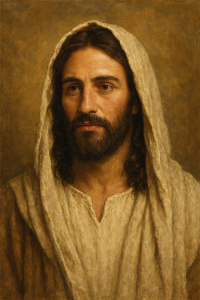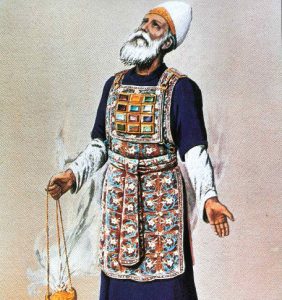


If Jesus was Jewish, why doesn't He have a Jewish name?
Today, virtually no reasonable person disputes the historical existence of Jesus. There are simply too many historical accounts to the contrary. The fact that Jesus was Jewish is also no longer a secret. Surely there are still some savages cut off from civilization who, wishing to defend the dignity of «their Jesus» against such an «insult,» would even be willing to get into a fight. But let me ask: who could a man have been who was born and lived a purely Jewish life in ancient Israel? A Russian? A Ukrainian? A Frenchman? A German?

Well, no. Even Orthodox Jews today recognize Him as one of the greatest Jews of all time. In 2015, dozens of rabbis signed a declaration (read the original here), which states:
«Rabbi Jacob Emden wrote that «...he [Jesus] exalted the Torah of Moses majestically ... and spoke more forcefully about the immutability of the Torah than all our sages.».
As early as 1976, Pinchas Lapid wrote the following in his book «Jesus in Conflict»:
«Rabbi Jacob Emden wrote that «...he [Jesus] exalted the Torah of Moses majestically ... and spoke more forcefully about the immutability of the Torah than all our sages.».
So why is He called Jesus, and not Izya, Yasha, or at least Misha?
Exactly! And what other Jews, besides the «Russians,» name their daughters Mary—after Jesus’s mother? And anyway, where in ancient Israel did He find all these guys with Russian names who became His disciples: Peter, John, Matthew, Paul, and so on? By the way, it’s usually intuitively clear to everyone that Judas Iscariot «was, of course, a Jew.» But what about all the others?
Well, Jesus’ namesake from Jewish history, Joshua, who lived 1,500 years B.C., will help us understand this. In the Jewish Tanakh (an acronym for Torah, Nevi’im, Ketuvim), there is an entire book dedicated to this hero. He was the second leader (after Moshe (Moses)) of Israel, which had recently been freed from Egyptian slavery. Since the ancient Book of Joshua was written entirely in Hebrew, it is worth noting that in the original text, his name is not “Joshua” but “Yehhoshua/יהשׁוע ben Nun, that is, YehOshua, son of Noon.
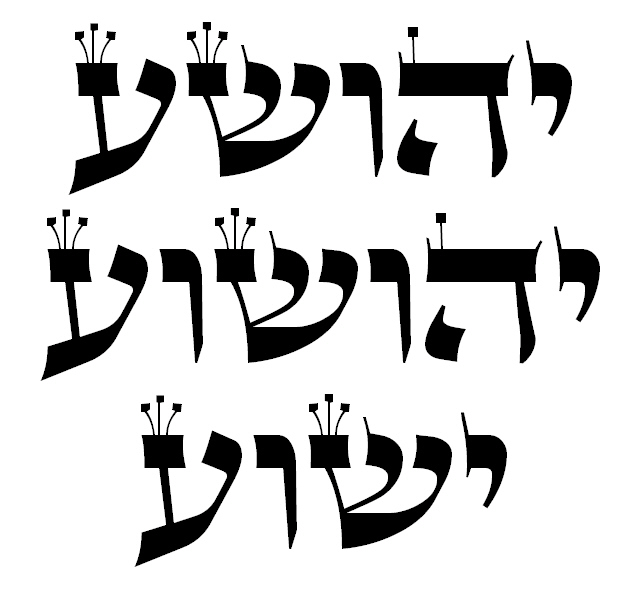
Incidentally, it is Hebrew names that archaeologists recognize by the name of the G-d of Israel (יהוה) often inserted in them. Characteristically, if a divine syllable is inserted at the beginning of a human name, it is usually a Yo- or Yeho- (for example, in the name of the Jewish king YehоShaphat/Jehoshaphat from 3 Kings 22:42), and if at the end, then -Yave or-Yahoo (for example, in the name of the Jewish prophet Yeshyahу/Yeshayahu, Isaiah 1:1, or by his well-known surname, Netanyahу = given by G-d).
In the Hebrew name. YehоThe same trend can be observed here. «Yeh»o-« is the name of God, and »-shua« means »salvation" (from the Hebrew word Yeshua/ישׁוע). That is, the Hebrew name Ye.hYeshua means «God saves» or «God’s salvation.» We find the shortened form of this name (Yeshua/ישׁוע) in the books of Ezra and Nehemiah (Ezra 2:2, 6, 36, 40, etc.).
But what does «Jesus» have to do with it?
It’s very simple. When, in the middle of the third century B.C., Jewish scholars translated the Holy Scriptures into Greek (the so-called Septuagint), which served as the international language of the time, they adapted all the names—which are usually transliterated (written using the letters and corresponding sounds available in the target language) rather than translated—to Greek conventions. And since the Greek language has no «y» or «sh» sounds, “Yeh” was consequently rendered ashoshafat was “Jehoshaphat” (Ιωσαφατ), from Yeshaya.hΗσαιας, and from Ye.hOshua – Jesus (Ἰησοῦς). The Russian language has adopted the Greek transliteration almost verbatim: Josaphat, Isaiah, and Jesus.
So, does that mean Jesus is an ancient Hebrew name?
Exactly! In the original, it's YehOshua, or Yeshua for short. One could even argue that this name was popular in ancient Israel (it appears more than two hundred times in the Tanakh) and occasionally pops up among modern Jewish names today.
The same can be said of all the other names in Jewish classics, the New Testament:
Anyway, it turns out that Jesus is just a Jewish name!
And what about his last name—Christ?